
6 Key Benefits of Cloud Backup Every South Florida SMB Needs to Know

Key Takeaways
- Cloud backup protects your business from data loss caused by hardware failure, human error, ransomware, and natural disasters
- Automated backup schedules eliminate the risk of missed or outdated backups
- Cloud backup systems scale with your business without requiring costly hardware upgrades
- Fast, tested recovery processes dramatically reduce downtime when incidents occur
Your business data is one of your most valuable assets and one of your most vulnerable ones. A single hardware failure, ransomware attack, or accidental file deletion can bring operations to a complete halt. For small and mid-sized businesses across South Florida, the question is no longer whether you need a data backup strategy. It is whether the one you have can actually protect you when something goes wrong.
Cloud backup has become the foundation of modern business continuity planning. At C&W Technologies, we help SMBs across the Treasure Coast and Palm Beach area build reliable, secure, and scalable backup systems that work in the background so your team never has to think about them until they are the only thing standing between you and a serious data loss event.
Here are six benefits of cloud backup that every business owner and IT decision-maker should understand.
When Should a Business Move from Local Backup to Cloud Backup
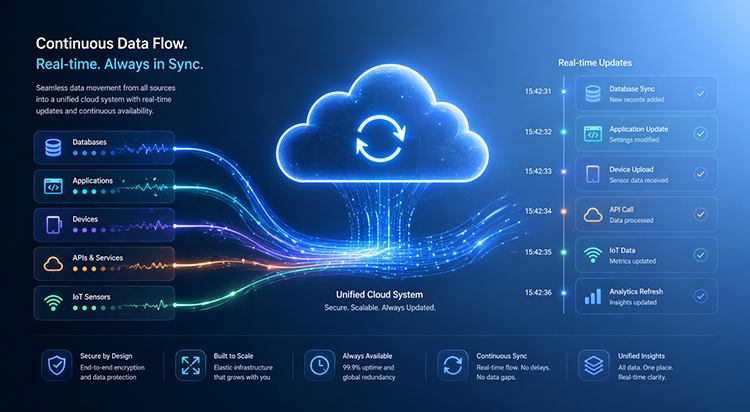
The honest answer is that most businesses should have made the switch already. Local-only backup solutions carry risks that cloud-based alternatives simply do not. Physical drives fail. Tape backups degrade. Local systems can be compromised in the same event, such as fire, flood, theft, or ransomware, that caused the original data loss. When both your primary data and your backup live in the same building, you have one point of failure, not two layers of protection.
The right time to move to cloud backup is before an incident occurs, not after. Businesses that transition after a data loss event are already dealing with the cost, stress, and disruption of a crisis. Businesses that transition proactively are positioned to treat a data loss event as a minor operational inconvenience rather than an existential threat.
If your current backup strategy involves any of the following: manual processes, local-only storage, no documented recovery plan, or backups you have never tested, then the right time to upgrade is now.
Benefit 1: Continuous, Automated Data Protection
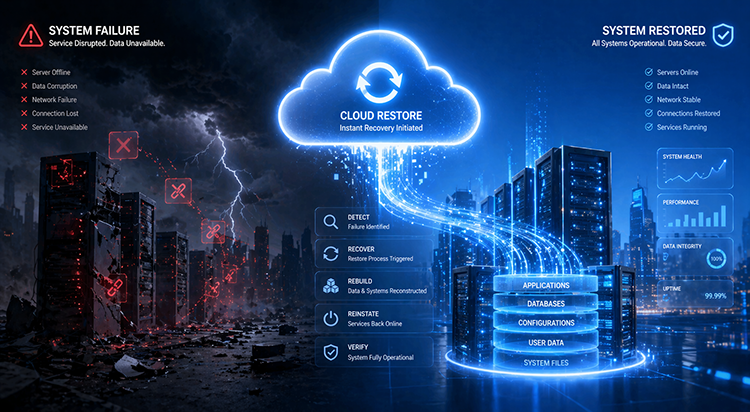
One of the most practical advantages of cloud backup is that it runs automatically without requiring any staff involvement. Backup schedules run in the background throughout the day, capturing changes to files, databases, emails, and applications as they happen.
This matters because most data loss does not happen at the exact moment a scheduled backup is about to run. It happens in between. Automated, continuous backup dramatically narrows the recovery point objective, the maximum amount of data your business could lose in a worst-case scenario. Instead of losing a full day’s worth of work, you might lose minutes.
Benefit 2: Strong Data Security and Encryption
Cloud backup is not just about storing copies of your data; it is about storing them securely. Enterprise-grade cloud backup solutions use end-to-end encryption, meaning your data is encrypted before it leaves your network and remains encrypted during transmission and at rest in the cloud storage environment.
This level of protection means that even in the unlikely event that the cloud storage infrastructure were compromised, your data would be unreadable without the encryption keys. Access controls and multi-factor authentication add additional layers of protection, ensuring that only authorized personnel can view or restore your backup data.
For businesses in regulated industries such as healthcare practices managing patient records, law firms handling privileged communications, and CPA firms storing sensitive financial data, this encryption layer is not optional. HIPAA, financial data regulations, and legal confidentiality requirements all demand that data be protected both in transit and at rest. A properly configured cloud backup solution satisfies these requirements and provides the audit logs to prove it.
Benefit 3: Fast Recovery When It Matters Most
The value of a backup system is measured by how quickly and reliably it can restore your operations after an incident. Downtime is expensive.
Cloud backup with fast restore capabilities allows you to recover individual files, full server environments, virtual machines, email archives, and business applications in minutes rather than days. The difference between a business that recovers in two hours and one that recovers in two days is not just productivity; it is client trust, revenue, and operational stability.
At C&W Technologies, we test recovery scenarios regularly so that when a real incident occurs, the process is already proven and documented.
When Did Anyone Last Test a Restore of Your Data?
A backup that has never been restored is a hope, not a recovery plan. Start with a Free IT Assessment from C&W Technologies and find out whether your current backups would actually get your business running again.
Benefit 4: Scalability That Grows With Your Business
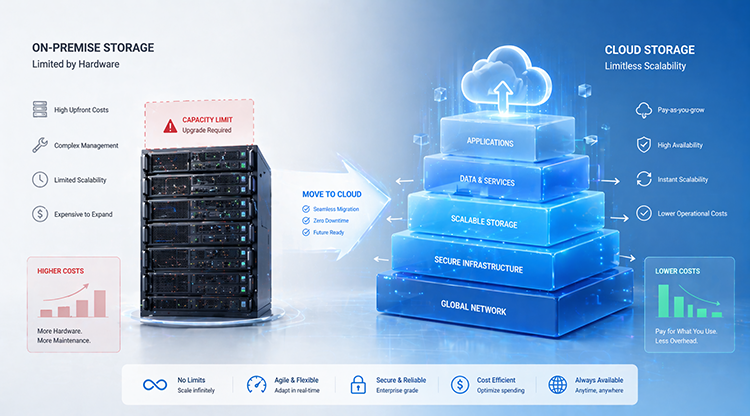
Your storage needs today are not the same as they will be in two years. As your team grows, your client base expands, and your data volumes increase, your backup infrastructure needs to keep pace. Traditional on-site backup solutions require physical hardware upgrades including new drives, additional servers, and expanded capacity, which involves capital expenditure and IT planning.
Cloud backup scales on demand. You increase storage capacity with a configuration change, not a hardware purchase. You pay for what you use, and you adjust as your needs evolve. For growing SMBs, this flexibility removes one of the most persistent friction points in IT infrastructure planning.
It also means you are not over-investing early in your growth cycle. A smaller business can implement a professional cloud backup solution right-sized for its current needs, knowing that the same system can scale seamlessly as the company grows, without changing providers, rebuilding configurations, or starting over.
Benefit 5: Offsite Protection Against Physical Disasters
South Florida businesses know better than most that physical disasters are not hypothetical. Hurricane season, flooding, storm surge, power outages, and the everyday risks of hardware failure are real operational concerns. A backup system that lives in the same building as your primary data does not protect against events that affect both at once.
Cloud backup stores your data in geographically separate, redundant data centers. Even if your office is completely inaccessible, whether flooded, storm-damaged, or simply without power for an extended period, your data remains safe, intact, and accessible from any location with an internet connection.
This accessibility is itself a business continuity advantage. Your team can work remotely, continue serving clients, and access critical files from home, another office, or a temporary workspace while your primary location recovers. Cloud backup does not just protect your data; it keeps your business operational through the disruption.
Benefit 6: Predictable Costs and No Infrastructure Overhead
Maintaining on-site backup infrastructure involves hardware costs, maintenance, replacement cycles, and the staff time required to manage it. As hardware ages, reliability decreases. Often quietly, without obvious warning, until a failure occurs at the worst possible moment.
Cloud backup shifts this model to a predictable, subscription-based approach. You pay a consistent monthly cost that covers storage, security, monitoring, and management. There are no unexpected hardware replacement bills, no emergency labor costs for overnight recovery efforts, and no surprise fees when you need to restore a large volume of data.
For SMBs managing tight budgets and limited IT resources, this cost predictability is a meaningful operational benefit. It allows accurate financial planning and removes the uncertainty that comes with aging on-site infrastructure.
Final Takeaway
Cloud backup is a strategic decision that determines how quickly and completely your business recovers from the unexpected. The difference between a business that loses three hours to an incident and one that loses three weeks often comes down to whether a reliable, tested, professionally managed backup system was in place before anything went wrong.
The six benefits covered here, including automation, security, fast recovery, scalability, offsite protection, and cost predictability, are not independent features. They work together to create a resilience layer that protects your operations, your clients, and your reputation from the full range of threats that SMBs face every day.
For businesses across the Treasure Coast and Palm Beach area, C&W Technologies has been the trusted IT partner for over 40 years. Our cloud backup and disaster recovery services are built specifically for small and mid-sized businesses that need enterprise-level data protection without enterprise complexity or cost.
We handle the configuration, monitoring, testing, and recovery so you can focus on running your business knowing that your data is protected, your recovery plan is tested, and your team has a local partner ready to respond when it matters most. Contact C&W Technologies today to schedule a consultation and close the gaps in your current backup strategy before they become an emergency.