
HIPAA Compliant VoIP for Treasure Coast Medical Offices: What Actually Makes a Phone System Compliant

Yes, a VoIP phone system can be HIPAA compliant, but no phone system is compliant out of the box. Compliance comes from how the system is set up and used: encrypted calls, controlled access, activity logs, and a Business Associate Agreement whenever the provider stores patient information such as voicemails or call recordings.
Can a VoIP phone system be HIPAA compliant?
A VoIP phone system can be HIPAA compliant when the practice applies Security Rule safeguards to it. In its guidance on audio-only telehealth, the HHS Office for Civil Rights explains that the Security Rule does not apply to a traditional landline. It does apply to VoIP, smartphone apps, and any technology that records, transcribes or stores audio.
So when a practice in Stuart or Port St. Lucie trades copper lines for cloud calling, its calls, voicemails and recordings become electronic protected health information (ePHI). They belong in your risk analysis next to your EHR and email.
That’s not a reason to avoid VoIP; it’s a reason to set it up correctly from day one, which is how we approach VoIP business phone systems for medical and dental offices.
Is there such a thing as a “HIPAA certified” phone system?
No. There is no official HIPAA certification for phone systems or any other technology. HHS states in its Security Rule FAQ on certification that it does not endorse or recognize private “certifications.” It also says a vendor’s certificate does not relieve a practice of its own legal duties.
Read “HIPAA certified” as marketing. What matters is a willingness to sign a Business Associate Agreement, clear answers about encryption and storage, and settings your practice controls.
Does my VoIP provider need to sign a Business Associate Agreement?
Your VoIP provider needs to sign a Business Associate Agreement (BAA) if it stores or routinely accesses patient information. A provider that only connects calls is what HHS calls a “conduit,” and no BAA is required. Most business VoIP plans go well beyond that.
| What the phone service does | Conduit or business associate? | BAA needed? |
| Connects the call and keeps nothing | Conduit | No |
| Stores voicemails on its servers | Business associate | Yes |
| Records calls or keeps transcripts | Business associate | Yes |
| Emails voicemails as audio files | Business associate | Yes |
| Uses AI to answer, transcribe or summarize calls | Business associate | Yes |
HHS is clear that a provider storing recordings or transcripts in its cloud is not a mere conduit. If your plan includes voicemail-to-email or call recording, expect to need a BAA.
What security features does a HIPAA compliant phone system need?
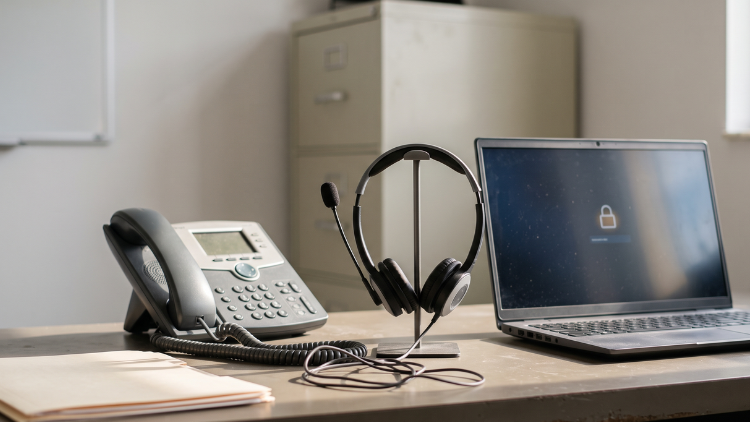
A HIPAA compliant phone system needs encryption, access controls, audit logs and safe storage for anything it keeps. The risk analysis questions HHS lists for phone technology translate into these settings:
- Encryption: Calls and saved recordings are encrypted in transit and at rest.
- Unique logins: Every staff member has their own account; there’s no shared front desk password.
- Auto-lock: Softphones and phone apps lock after inactivity.
- Audit trails: Logs show who accessed which recordings and when.
- Retention rules: You decide how long recordings are kept and who can play them.
Staff who answer calls from home bring their Wi-Fi and devices into the system too; our guide to VoIP for remote workers covers that setup. For plain-language explanations of each feature, see the VoIP features a business phone system should have.
What Florida rules apply on top of HIPAA?
Florida adds its own breach law on top of HIPAA. The Florida Information Protection Act, section 501.171, counts medical history, treatment and diagnosis as protected personal information. It generally requires notice to affected Floridians no later than 30 days after a breach is determined. It also requires notice to the state Department of Legal Affairs when 500 or more Floridians are affected.
For a Martin or St. Lucie County practice, an exposed voicemail box or folder of call recordings can trigger both federal and state notice duties. Our page on IT for medical offices explains how phones fit into a practice’s wider security plan.
What should I ask a VoIP provider before switching?
Ask these five questions before you sign, and get the answers in writing:
- Will you sign a Business Associate Agreement covering voicemail, recordings and transcripts?
- Are calls and stored recordings encrypted, and where is the data kept?
- Can each user have their own login with multi-factor authentication?
- Can we see call logs and access history, and set our own retention periods?
- Do features like AI answering or voicemail-to-email have separate privacy terms?
Our article on VoIP unified communications for small businesses covers the broader questions to settle before upgrading.
C&W Technologies has supported Treasure Coast businesses for more than 40 years, and our VoIP systems include encrypted calling, call logs and compliance-ready configurations. To review your current phones alongside our HIPAA compliance services, call (772) 287-5215 or schedule a free consultation.
Final Takeaway
- VoIP can be HIPAA compliant, but only when it’s configured and managed with Security Rule safeguards.
- “HIPAA certified” is a marketing phrase; your practice keeps the responsibility.
- If your phone provider stores voicemails, recordings or transcripts, you need a signed BAA.